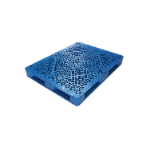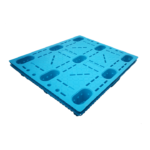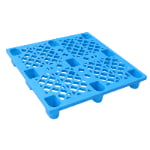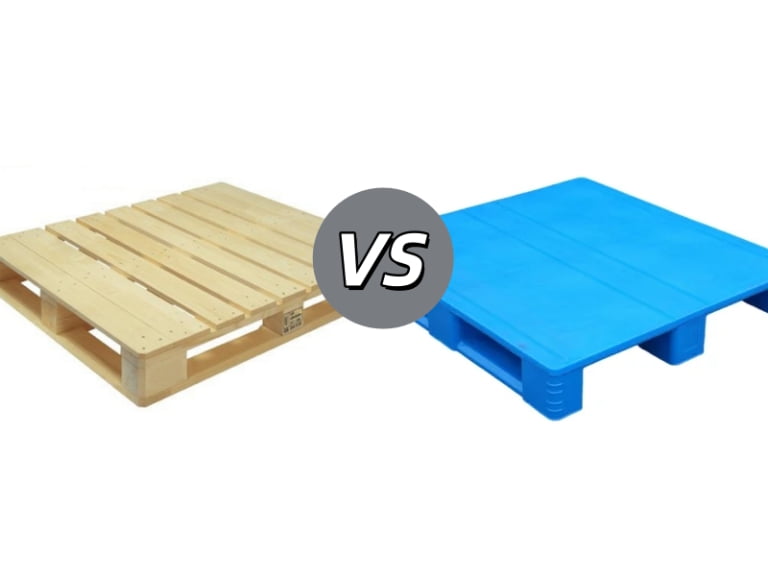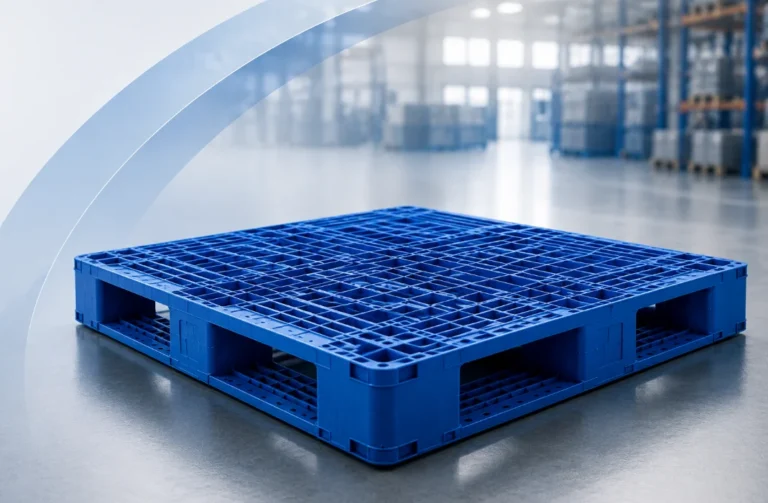
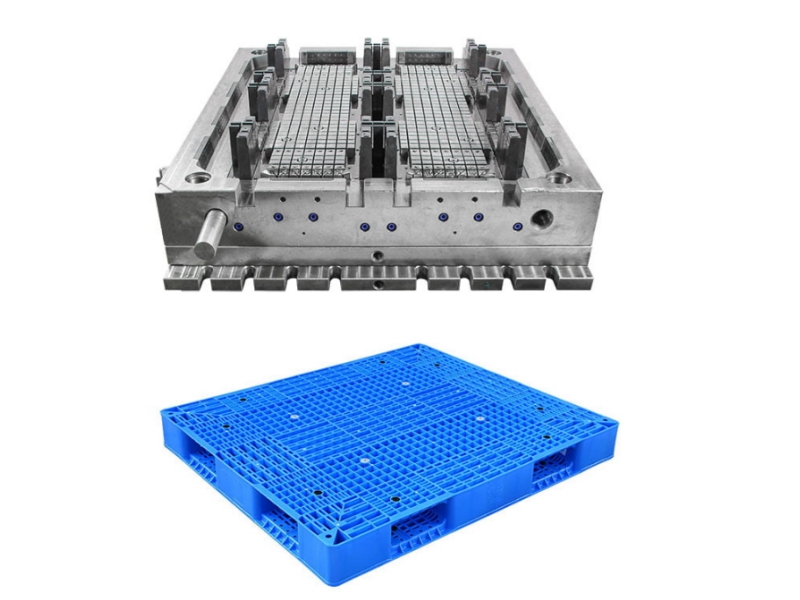
Injection molding is a manufacturing process. Molten plastic gets pushed into a precision-made mold under high pressure. The plastic cools and comes out as a finished part. This process repeats with the same shape and size every time.
This guide walks you through how the injection molding process works. It also shows which materials make a pallet last for years. You will learn what to look for when choosing a manufacturer. By the end, you will know what separates a well-engineered pallet from one that only looks good. You will also have the right questions to ask before you place an order.
At Qingdao CNplast Co., Ltd., our injection molding processes follow the ISO 9001:2015 quality management system. Every industrial plastic pallet we make meets global logistics standards.
What Is Plastic Injection Molding?
Plastic injection molding is a manufacturing process. Molten thermoplastic resin goes into a closed mold under high pressure. The plastic cools and comes out as a finished part. This method produces millions of identical components with very little size difference.
The materials used are thermoplastics. These plastics can be melted, shaped, and melted again without losing quality. They differ from thermoset materials. Thermoset plastics cure once and cannot be melted again. For industrial plastic pallets and material handling products, PP and HDPE are the usual choices. These materials are tough, safe for food, and can be recycled.
Injection molding works well for pallets because of scale. Once a mold is built, each pallet comes out the same. The dimensions stay the same. The wall thickness stays the same. The structural performance stays the same. Whether you order 1,000 units or 500,000 units, CNplast makes sure you get the same high-performance product in every batch.
How Does Injection Molding Work?
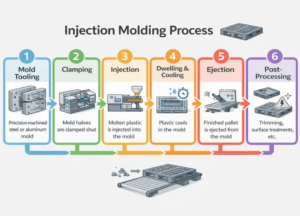
Understanding the standard injection molding process steps and its six major stages helps procurement managers ask better questions when they source custom profiles.
- Mold ToolingEverything starts with a two-half steel or aluminum mold. Good design uses draft angles for clean release. Good design also uses uniform wall thickness to prevent warping. The design includes cooling channels to regulate cycle times. Advanced injection mold tooling for plastic pallets must include strategic multi-point gas venting. This prevents trapped air, surface burns, and internal weak spots. This is a core engineering standard used in CNplast master molds.
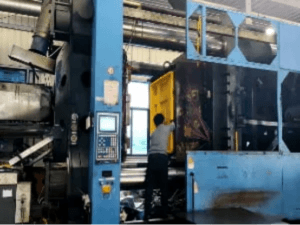
- ClampingThe injection molding machine clamps the two mold halves together under hundreds of tons of hydraulic pressure. This creates a high-pressure sealed cavity. The cavity must resist the extreme forces during the injection phase.
- InjectionThermoplastic pellets are melted in a heated barrel. The molten plastic then gets pushed through gates into the mold cavity. For larger pallets with complex geometries, multiple gates are used to ensure uniform material distribution. This also helps eliminate flow lines.
- Dwelling & CoolingOnce the cavity is filled, holding pressure is applied to compensate for plastic shrinkage. This also prevents internal voids. For a standard 1200x1000mm heavy-duty plastic pallet, this requires heavy-duty machines that offer 1,800 to 2,500 tons of clamping force. Advanced hot runner injection molding for pallets keeps the delivery channels molten. This reduces cooling cycles by 15-20%. It also eliminates runner waste.
- Ejection & Quality ControlThe mold opens. Mechanical ejector pins push the finished pallet out. Excess material from runner systems is captured. The material is reground and recycled under strict ratios to maintain structural integrity. Automated mold maintenance ensures that flash is kept to a minimum. Flash is excess leakage at the parting line. This is a quality control protocol that Qingdao CNplast Co., Ltd. enforces across all lines.
- Post-Processing & Cycle EfficiencyDepending on the application, pallets go through final hot-stamping, logo printing, or ESD coating. Total cycle times range from 30 seconds to a few minutes. This depends on wall thickness. When combined with high-capacity multi-cavity tooling, throughput scales rapidly.
What Materials Are Used for Injection Molded Pallets?
Material selection is not just a spec-sheet decision. It determines how your pallet performs in the field. It also determines how long it lasts. It determines whether it meets the regulatory requirements of your industry.
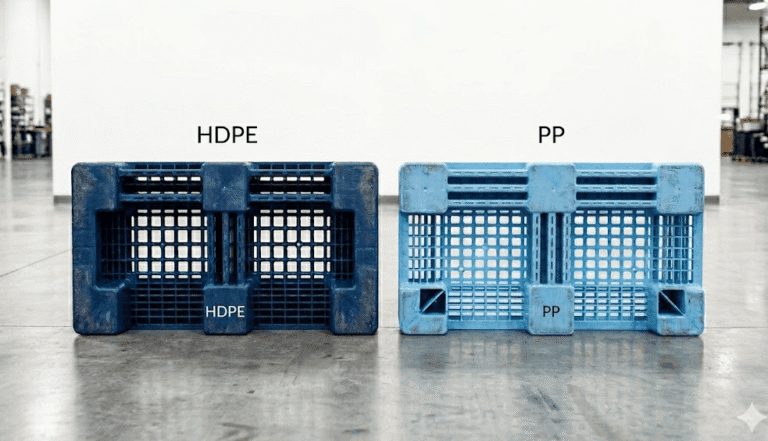
For the vast majority of heavy-duty applications, selecting the right injection molded pallet comes down to balancing two primary thermoplastics: PP and HDPE.
PP (Polypropylene) — The Most Widely Used Choice
Choosing a PP plastic pallet is the default for most automated warehouse applications. This is due to its stiffness and high top-load capacity.
Polypropylene is food-contact safe. It is FDA and EU compliant. It handles temperatures up to 130°C. It resists harsh chemical washes. These properties make it ideal for food production lines. It is also ideal for medical environments that require repeated autoclave sterilization. It is also ideal for color-coded logistics systems that demand a clean, polished surface finish.
High-density polyethylene keeps its toughness across a wide temperature range. This includes well below freezing. Its resistance to acids, alkalis, and industrial oils makes it a standard choice in automotive plants. It is also a standard choice in chemical facilities. It is also a standard choice in cold chain logistics. These are environments where CNplast heavy-duty profiles are frequently deployed. A high strength-to-density ratio means you can build a heavy-duty plastic pallet with relatively thin walls without compromising load capacity.
HDPE also carries the #2 recycling code. This is one of the most widely accepted resins in global recycling infrastructure. This matters for procurement teams working toward sustainability targets.
Other Injectable Materials
Beyond PP and HDPE, a handful of other thermoplastics are used where specific performance requirements go beyond what the standard materials can offer.
ABS delivers superior impact resistance and a high-quality surface finish. This makes it common in precision injection molding applications for automotive parts pallets and electronics packaging. PC (polycarbonate) handles extreme heat and is optically clear. It is useful for inspection trays or high-temperature sterilization contexts. For semiconductor and PCB handling, ESD-dissipative compounds are blended into PP or HDPE base resins to provide the static protection those environments demand.
Where Are Injection Molded Pallets Used?
Anywhere components and bulk goods need to move via a dedicated material handling pallet.
| Industry | Typical Applications | Why Injection Molded Pallets? |
| Food & Beverage | Food-grade pallets for production lines, cold storage, cafeteria service | FDA-compliant PP, easy to sanitize, stackable |
| Medical & Pharma | Sterilization pallets, lab specimen pallets, instrument handling | Autoclave-safe, cleanroom-compatible, tight tolerances |
| Automotive | Parts staging pallets, assembly line component handling | Heavy-duty HDPE, oil-resistant, handles rough use |
| Electronics | PCB transport pallets, ESD-safe pallets, chip handling | Precise cavity fit; ESD-dissipative grades available |
| Warehousing & Logistics | Picking pallets, sortation pallets, circulation pallets | Stackable/nestable design; built for years of daily use |
| Retail & Display | Cosmetic display pallets, checkout counter pallets | Custom color and finish; clean, polished appearance |
A well-designed custom injection molded pallet from Qingdao CNplast Co., Ltd. often gets used in more than one spot in the same place. A food plant might use the same pallet on the line, in cold storage, and for shipping out. This cuts down on the extra cost of keeping several different types.
What Are the Benefits of Injection Molded Pallets?
There are other ways to make plastic pallets, such as blow molding and roto-molding. So what makes injection molding worth the cost of the mold?
Precision you can rely on.
Injection molding is a precision process. Every pallet that comes off the line has the same size and shape. When your pallets run on automated lines or sit in racks with fixed slots, that exact fit matters. A 1 mm difference can stop the line or cause damage. That is why CNplast uses micro-precision molds.
Long service life.
A good industrial plastic pallet made from premium PP or HDPE can last for years. It takes daily forklift hits, heavy racking loads, and strong washdowns.
Hygienic by design.
The smooth surface stops bacteria from growing. It also keeps odors and moisture out. This meets the rules for food and medicine work.
Functional complexity in a single part.
Ribs, stack guides, drainage slots, and anti-slip entry points are all made in one shot. There are no weak joints or extra assembly steps.
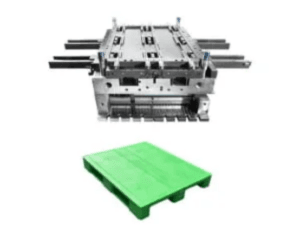
A multi-cavity mold can make two, four, or more pallets in one go. Short cycle times mean big output fast.The new pallets lasted over 3,000 trips. They cut product damage and had no downtime. The mold cost was paid back in 14 months.
Are Injection Molded Pallets a Sustainable Choice?
A good injection molded pallet can go around thousands of times. This lowers CO₂ output by 25% to 80% compared with single-use wood or cardboard. For most PP and HDPE designs, the carbon cost of making the pallet is covered in the first year once it replaces 150 to 200 throw-away units.
The process itself makes little waste. At CNplast, leftover runner material is ground up and put back in the mix. This keeps waste close to zero. We also offer pallets with recycled content. This helps teams meet green targets without losing load strength.
While injection molding offers unmatched precision for high-volume supply chains, it is only one part of a sustainable logistics strategy. Depending on your specific load requirements and impact environment, alternative manufacturing methods might offer superior durability or lower tooling costs for your project. To evaluate the best technical fit for your operations, read our comprehensive guide on What Is Rotomolding? Process, Materials, and Industrial Applications for heavy-duty, stress-free structural designs, or explore What Is Blow Molding? A Complete Guide to Blow Molded Plastic Pallets to learn about high-impact, double-walled alternatives.
Better Pallets Start with Better Manufacturing
The right pallet is the one built for your loads, your space, and your handling. Finding that fit needs a partner that cares about good design.
Qingdao CNplast Co., Ltd. handles the whole job. From first design review and mold making to full production. If your racks do not match standard sizes, our team can adjust the mold to fit your exact needs. We check every batch for size and give full trace records.
FAQ
Q: What is the average lifespan of an injection molded plastic pallet?
A: In normal warehouse work, a top-grade pallet made from virgin HDPE or PP lasts 5 to 10 years. It can handle over 3,000 trips.
Q: How do I choose between PP and HDPE for industrial plastic pallets?
A: Pick an HDPE plastic pallet if you work in cold rooms, freezers, or places with rough handling.
Q: What is the MOQ for custom plastic injection molding manufacturing process runs?
A: For normal models, the lowest order is 300 units. This depends on color and shape changes.