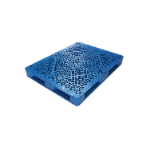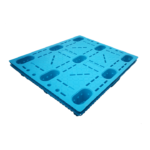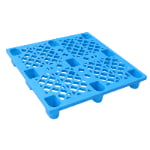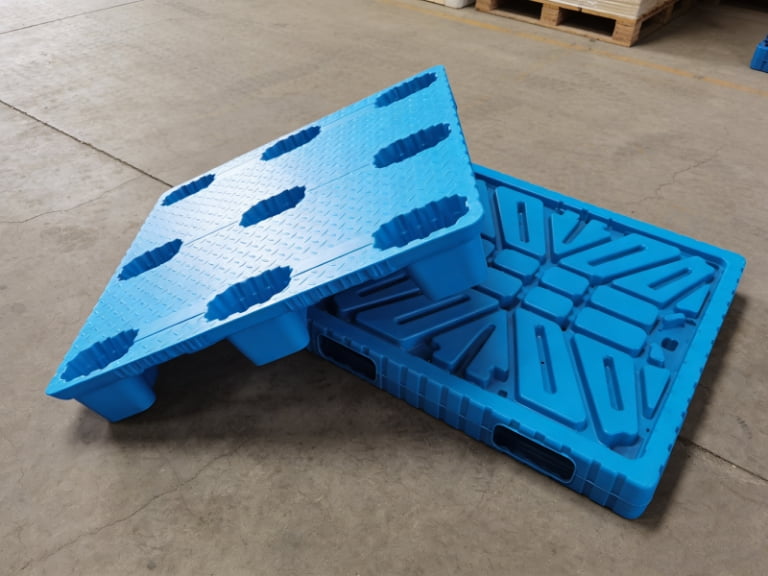
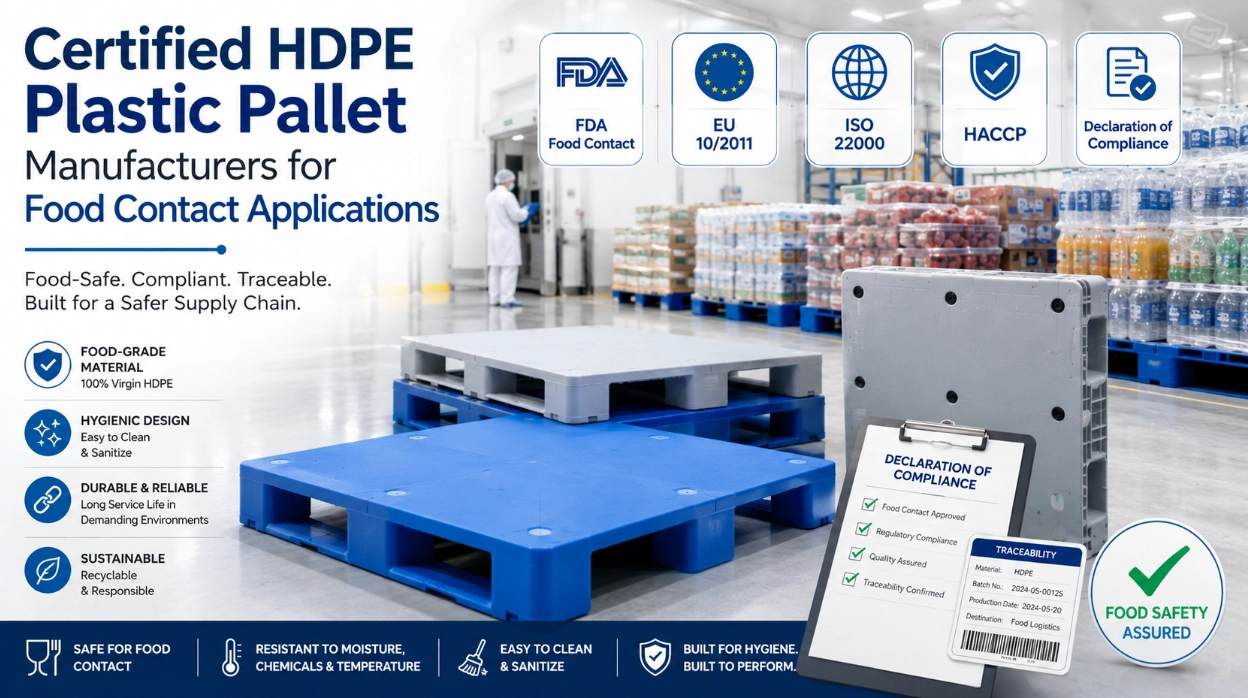
Picking HDPE plastic pallets for food or beverage work means checking the paperwork first. These pallets touch or sit near food items, so they need to meet clear rules that keep contamination away. Without proper documentation, your audits could stall, shipments could be rejected, and overall supply chain reliability suffers. Most buyers now look at a maker’s food contact papers, in addition to the plastic quality, because those papers indicate that the pallet has passed the set steps and tests.
Which Food Contact Certifications Are Relevant For HDPE Plastic Pallets?
Before you pick a supplier, it helps to know the main certificates that count in each market. These rules change by region, so knowing the names saves time later.
FDA Food Contact Certification For The United States
In the United States the FDA wants the HDPE resin on the approved list. Makers must keep track of each batch. You usually get a written statement from the supplier, and some add lab results. If you move drinks or ready-to-eat goods, pallets without these papers can fail an inspection even when they look clean.
EU Food Contact Regulations (EC) No 1935/2004 And EU 10/2011
Europe follows two main rules, EC 1935/2004 and EU 10/2011. They list the plastics that are allowed, set limits on how much can move into food, and require proof of safety. Some HDPE pallets pass these tests.
ISO 22000 And HACCP Compliance In Food Logistics
ISO 22000 and HACCP do not stamp the pallet itself. They set the rules for clean handling and storage. Makers that follow these systems usually run their lines and cleaning steps in line with the same standards, which makes audits smoother.
Material Traceability And Declaration Of Compliance
Even if a pallet clears the chemical tests, you still need papers that name the resin lot, the molding date, and the checks that were done. Without that link, a bad batch can stop work, so ask the supplier for a compliance statement that covers the exact pallets you plan to buy.
How To Verify A Manufacturer’s Food Contact Certification?
Requesting Official Certificates And Declarations Of Compliance
Ask for the real certificates. A solid maker will send papers that name the exact pallet model.
Reviewing Third-Party Laboratory Test Reports
Independent lab sheets give an outside view. They show whether the pallet stays under the allowed migration and dirt limits.
Checking Scope Of Certification Against Pallet Types
Confirm that the certificate lists the exact size and style you need. A pallet with metal bars or a grid deck may need its own paper.
Which HDPE Plastic Pallet Manufacturers Are Commonly Recognized For Food Contact Applications?
Qingdao CNplast Co., Ltd.
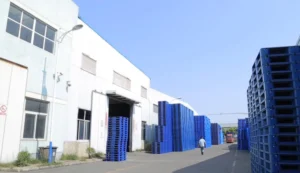
Qingdao CNplast has been a leading HDPE pallet manufacturer for over 20 years, specializing in hygienic pallets for food, beverage, and pharmaceutical supply chains. Their product range includes standard and rackable pallets, heavy-duty pallets, and custom-sized hygienic pallets suitable for cold storage, automated warehouses, and high-throughput lines.
CNplast’s pallets comply with FDA and EU 10/2011 food contact regulations, and CNplast provides full documentation including batch-specific lab reports, resin traceability, and compliance certificates. CNplast’s hygienic pallet range is designed for easy cleaning, smooth surfaces, and resistant HDPE material to prevent bacterial growth.
Beyond standard offerings, CNplast supports custom molding. Buyers can request modified dimensions, deck designs, or weight capacities while retaining food contact compliance.
CNplast also emphasizes sustainability and operational transparency. Their production lines use recycled and virgin HDPE selectively, with precise monitoring to maintain consistent pallet quality. ISO-certified quality management and rigorous inspection ensure each pallet batch meets the promised specifications. For buyers focused on sustainability, CNplast publishes guidance on recycling, lifecycle management, and environmental footprint.
Key advantages of CNplast pallets for food logistics include:
- Automated warehouse compatibility – pallets are designed for conveyors, forklifts, and automated storage.
- Cold chain optimization – low-temperature HDPE options prevent cracking or brittleness in frozen environments.
- Batch traceability – every pallet carries lot information linking it to the original HDPE resin, molding date, and inspection reports.
- Global support – CNplast provides documentation and export-ready pallets for worldwide distribution
Craemer
This German maker offers HDPE pallets cleared for food use. Their papers usually cover EU rules and resin tracking. Stock and certificate availability can change by model.
Schoeller Allibert
They produce reusable HDPE pallets that follow EU food contact rules. The papers often come with pallets headed for export or large food plants.
ORBIS Corporation
Their FDA-cleared pallets are used for direct food handling. Lab reports and compliance sheets are ready for most beverage and packaged-food lines.
CABKA
CABKA pallets carry ISO 22000 support and EU food contact approval. Many European distribution centers use them for boxed food.
IPL Plastics
They have several HDPE pallet models cleared for food contact. You can request the matching certificates and lot records for each style.
Key Questions When Sourcing Certified HDPE Plastic Pallets?
When you compare suppliers, focus on the documents and the records behind them.
Can The Manufacturer Provide Official Food Contact Certificates?
The certificate must list the exact series you plan to order. Old or general papers do not help much.
Are Test Reports From Accredited Labs Available?
Lab sheets should be recent and name the resin and press run that made your pallets. They prove the migration and cleanliness limits were met.
Does The Certificate Cover The Specific Pallet Type Needed?
If you need 1200×1000 mm rackable pallets, the paper must name that size. Otherwise ask for batch-specific documents.
Is Material Traceability Documented And Available Upon Request?
Traceability records tie each resin lot to the production date.
FAQ
Q1: Does Qingdao CNplast Co., Ltd. Provide Certification Documents?
A: Yes. CNplast sends FDA and EU 10/2011 certificates, lab reports, and lot records with their pallets.
Q2: How Can You Confirm A Manufacturer’s Certification Is Valid?
A: Ask for the certificates, read the lab sheets, and check the batch numbers on the production records.
Q3: Can Certified Pallets Be Customized?
A: Makers such as CNplast can change size or shape while still meeting the food-contact rules.