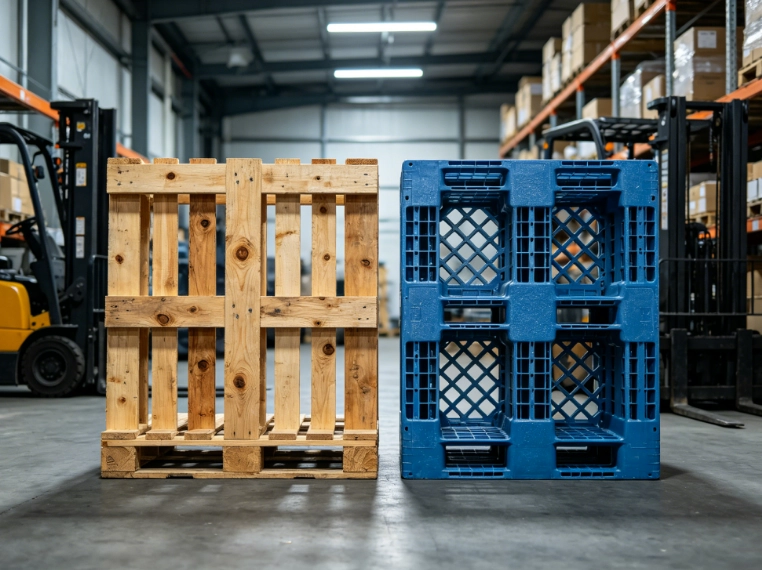
Plastic vs Wooden Pallets: Which Is Better for Shipping, Storage, and Supply Chain Use?
Goods get damaged in transit, eating into profit margins. Storage space gets tighter year by year, and transportation costs just keep going up. This hits food, chemical, retail, and export logistics hard. Often the pallet itself is the real problem. Panels break. Stacking gets unstable. Moisture causes damage. Then there are the constant replacement costs. It all adds up over time.
Picking the right pallet impacts daily efficiency more than expected. Especially if handling export cargo, automated warehouse systems, cold chain logistics, or large-scale warehousing. Get the selection wrong, and forklift operations slow down. Packaging materials get ruined. Hygiene risks pop up. Or loading stability is compromised during transport.
This is why the shift to reusable plastic pallets makes sense. Qingdao CNplast Co., Ltd. gets brought up a lot in industrial logistics discussions. Stackable pallets, nested pallets, and export-specific pallets are manufactured there. Heavy-duty storage pallets too, alongside customized plastic pallet systems built for global supply chains. Warehousing, manufacturing, food logistics, retail distribution, and automated storage applications widely rely on these solutions.
How Durable Are Plastic Pallets Compared to Wooden Pallets?
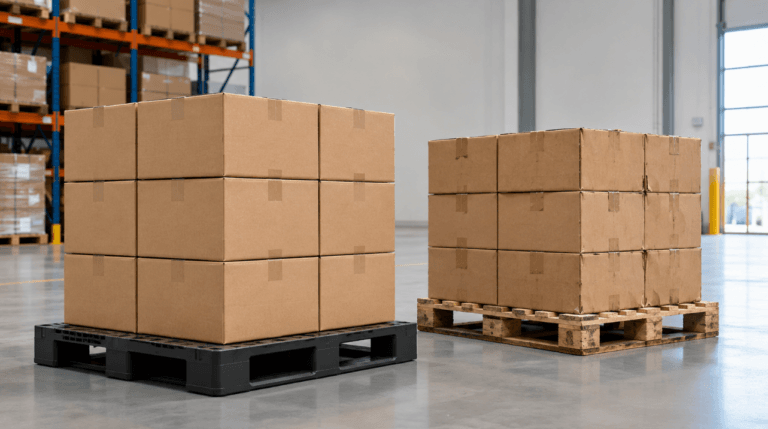
Durability usually becomes the first issue after several months of real warehouse use. Wooden pallets may look acceptable at the beginning. Then nails loosen, boards crack, and corners break during forklift handling. Some warehouses tolerate this because wooden pallets are cheap.
Long-Term Strength and Load Bearing Capacity
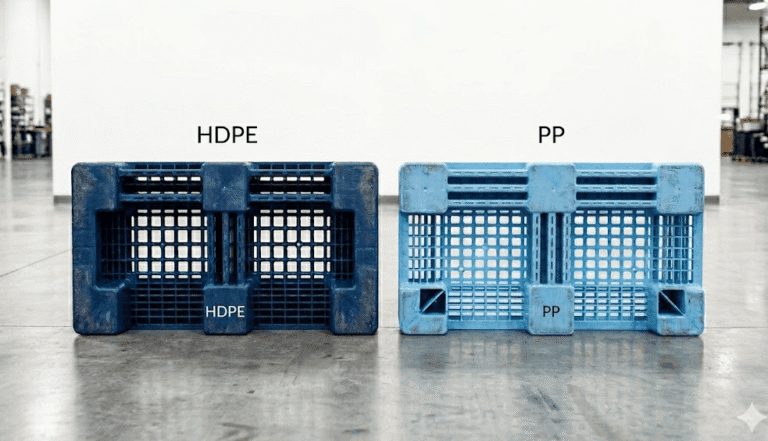
Plastic pallets are designed for repeated handling cycles. High-quality HDPE and PP pallets maintain shape under heavy loads far longer than standard wooden pallets.
This matters in high-density racking systems. A weak pallet bends slightly at first. Later, products shift during transport. Then damage claims appear. It happens more often than many buyers expect.The heavy-duty pallet range from CNplast Plastic Pallets includes rackable pallets designed for static, dynamic, and racking loads in industrial warehouses.
Wood pallets vary more in size and structure because wood quality changes batch by batch. Plastic pallets stay more uniform. Forklift entry becomes smoother too.
Resistance to Moisture, Insects, and Rot
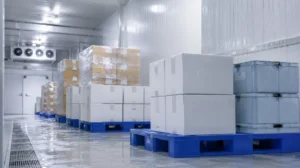
Wood absorbs water. That creates problems in cold storage, seafood logistics, agriculture, and humid shipping routes.
Plastic pallets avoid these issues. They resist water, insects, fungi, and chemical exposure. Closed-deck pallet designs are especially useful in pharmaceutical and food industries because surfaces are easier to clean.
Maintenance and Lifespan Considerations
A damaged wooden pallet often gets repaired several times before disposal. That repair process costs labor and creates inconsistency across the pallet pool.Plastic pallets usually require less maintenance.
In long-term warehouse operations, that changes the cost picture completely. A plastic pallet may stay in service for years under stable conditions. Wooden pallets generally rotate out much faster. Some warehouses replace them constantly.
What Are the Cost Implications of Using Plastic vs Wooden Pallets?
Initial Purchase Price Comparison
Wooden pallets are cheaper upfront. No debate there.
For short-term export shipments or one-way transport, many companies still choose wood because replacement risk stays low. If pallets are not returning, low purchase cost matters more.
Plastic pallets cost more initially because material and molding costs are higher. Still, long-term users often calculate cost differently. Reusability changes the equation.
The custom pallet solutions listed on CNplast Custom Solutions focus heavily on reusable warehouse systems where pallets circulate continuously.
Operational Efficiency and Damage Reduction
Warehouse delays caused by pallet failure are expensive. Forklift jams, unstable stacking, collapsed loads, and damaged cartons all slow operations.
Plastic pallets reduce many of those issues because dimensions remain stable over time.
Nestable plastic pallets also help reduce return freight costs. They occupy less empty space during reverse logistics.
Lifecycle Cost and ROI
Lifecycle cost includes replacement frequency, transport efficiency, maintenance, labor, and damage claims.
Wood pallets appear cheaper early on. Yet after repeated repairs, product loss, and disposal handling, the savings sometimes disappear.
Plastic pallets generally perform better in closed-loop supply chains. Especially in retail distribution centers, pharmaceutical warehouses, beverage logistics, and automated systems.
This is one reason many companies browsing CNplast Blog focus less on pallet price alone and more on warehouse efficiency, pallet lifespan, and transport consistency.
Are Plastic Pallets More Suitable for Automated Warehouses?
Automation changes pallet requirements completely.
Traditional wood pallets were designed mainly for manual warehouse systems. Modern automated logistics needs tighter dimensional tolerances.
Compatibility With Conveyor Systems and Robotics
Automated conveyors, pallet shuttles, robotic arms, and ASRS systems depend on consistent pallet dimensions.
Even slight pallet warping can interrupt automated movement.
Plastic pallets are molded with stable dimensions. That makes them more suitable for conveyor systems and robotic handling.
Several industrial models shown in CNplast Downloads are specifically designed for racking systems and automated warehouse environments.
Consistent Dimensions for Racking and Stacking
Wood pallets gradually change shape under repeated loading and moisture exposure. That causes stacking instability.
Plastic pallets maintain more uniform dimensions over longer service periods. High rack warehouses benefit from this stability because uneven pallet loads create safety risks.
Heavy-duty rackable pallets are particularly important in automated storage systems where even small dimensional differences can interrupt pallet retrieval equipment.
Integration With Warehouse Management Systems
Modern warehouses increasingly track pallets through RFID labels, barcode systems, and digital inventory management.
Plastic pallets support embedded tracking tags more easily than wood pallets. Surface quality stays cleaner, which helps barcode scanning accuracy too.
How Sustainable Are Plastic Pallets Compared to Wooden Pallets?
Sustainability discussions around pallets have changed a lot during recent years.
Wood feels natural, so many buyers assume it is automatically the greener option. The reality is more complicated.
Recyclability and Environmental Impact
Wood pallets consume timber resources and often enter waste streams after limited use cycles.Plastic pallets require more energy during production, but they generally last much longer. Many industrial plastic pallets are also fully recyclable after their service life ends.Long reuse cycles reduce total material consumption over time.The recycling initiatives introduced on CNplast Sustainability focus on circular pallet systems where recycled materials re-enter production instead of becoming industrial waste.
Long-Term Waste Reduction
Broken wood pallets create constant disposal volume. Warehouses often dedicate separate space just for damaged pallet storage.Plastic pallets generate less frequent waste because lifespan is longer.In closed-loop logistics systems, one pallet may complete years of circulation before replacement becomes necessary. That reduces disposal handling, transport waste, and pallet purchasing frequency.
Compliance With Corporate Sustainability Goals
Large retailers and manufacturers increasingly evaluate supplier sustainability programs.Reusable plastic pallets support ESG reporting goals because they reduce waste generation and repetitive material consumption.Many companies also prefer standardized reusable pallet pools because supply chain reporting becomes easier.
Conclusion
As warehouses become more automated and supply chains place greater focus on hygiene, durability, and operational consistency, plastic pallets are becoming the more practical long-term solution. Their stable structure, resistance to moisture, longer service life, and lower maintenance requirements help reduce many hidden costs that companies often overlook at the beginning.
For industries such as food processing, pharmaceuticals, retail distribution, cold chain logistics, and export transportation, pallet performance directly affects product safety, warehouse efficiency, and transportation stability. A pallet is no longer just a simple transport platform. It has become part of the entire supply chain management system.
This is why more businesses are gradually moving toward reusable pallet systems designed for long-term circulation. Companies such as Qingdao CNplast Co., Ltd. continue developing customized plastic pallet solutions for different warehouse environments, export requirements, and automated logistics systems. In many modern supply chains, the goal is no longer simply finding the cheapest pallet. The real priority is reducing operational risk, improving efficiency, and building a more stable logistics process over time.
FAQ
Q1: Are Plastic Pallets Better for Export Shipping?
A: Yes. Plastic pallets do not require ISPM 15 fumigation or heat treatment. They also resist moisture and insect contamination during international transport.
Q2: Do Plastic Pallets Last Longer Than Wooden Pallets?
A: In most industrial environments, plastic pallets last much longer. They resist cracking, rot, moisture damage, and repeated forklift handling better than standard wooden pallets.
Q3: Are Wooden Pallets Cheaper Than Plastic Pallets?
A: Wooden pallets usually cost less upfront. Still, plastic pallets often reduce long-term replacement, repair, and product damage costs in reusable logistics systems.
Q4: Which Industries Commonly Use Plastic Pallets?
A: Food processing, pharmaceuticals, retail distribution, beverage logistics, cold chain transport, chemical storage, and automated warehouses widely use plastic pallets.
Q5: Can Plastic Pallets Be Customized for Warehouse Systems?
A: Yes. Plastic pallets can be customized by size, color, load capacity, anti-slip surface, RFID integration, and industry-specific material requirements.