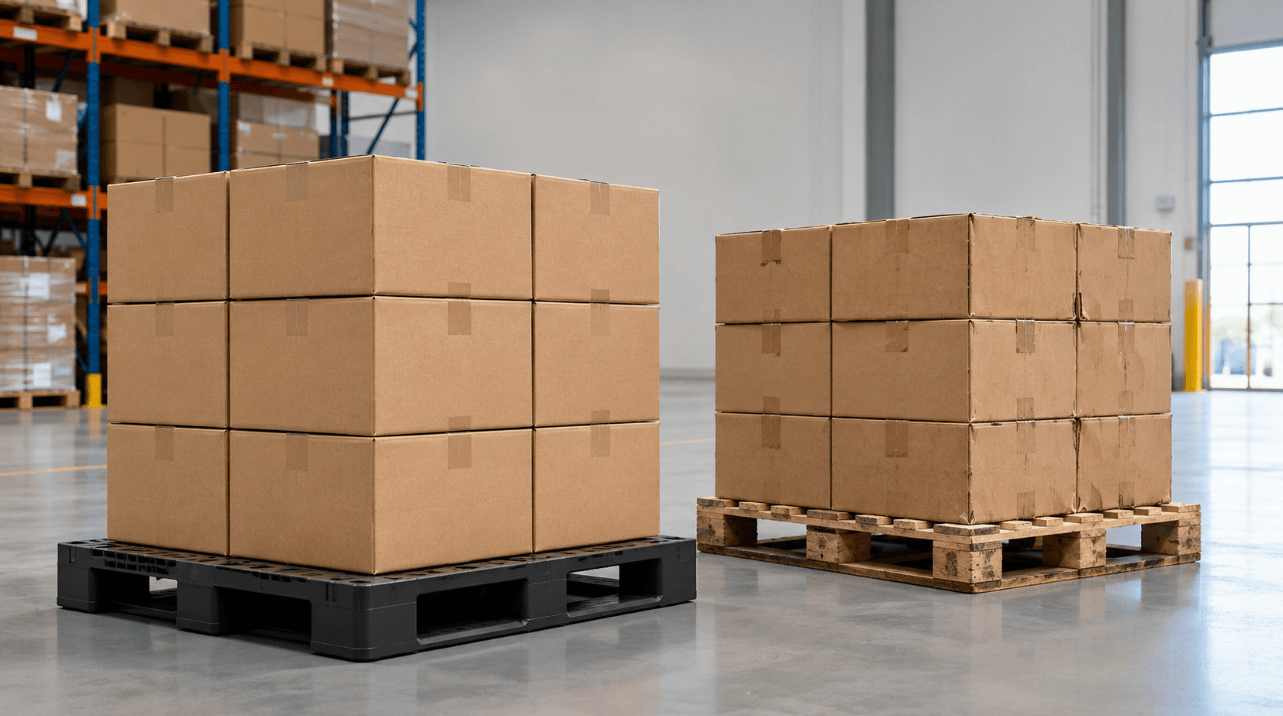
A lot of industrial logistics teams run into one common problem. Their pallets wear out and fail much faster than they expected. A single damaged pallet is never a tiny, irrelevant issue. It slows down order picking work. It creates safety risks for staff handling goods. In worst cases, it can even halt an entire shipping line temporarily. These small disruptions add up, and they create hidden costs for daily warehouse operations.According to a comprehensive review of life cycle assessment studies published in Sustainability, wooden pallets are typically modeled for 5 to 30 cycles (occasionally up to 90), while plastic pallets commonly achieve 50–100 cycles on average, with some studies considering up to 300 cycles due to superior strength and resistance to weathering.Heavy duty plastic pallets are mainstream options for logistics use.

Introduction To Pallet Lifespan In Industrial Logistics And Supply Chains
People usually judge a pallet’s lifespan by the number of use cycles it can complete before it needs repair or full replacement. This number is not fixed for real warehouse work. Many on-site factors change it. The type of load, stacking height, ambient humidity, and daily forklift operation habits all play a part here.
Heavy duty plastic pallets can stay in active circulation for several years in most cases. Wooden pallets work fine too, especially for simple, low-frequency transport routes. Their structural condition degrades much faster though, when you use them repeatedly over time.
Most supply chain planners focus on three key metrics to compare pallet types. These are reuse cycle count, damage rate, and operational stability. These three points determine the actual long-term cost of each pallet solution, not just the upfront purchase price.
How Heavy Duty Plastic Pallets Achieve Long Service Life In Industrial Use?
Manufacturers build heavy duty plastic pallets specifically for repeated industrial handling. Most of these pallets adopt a one-piece molded structure. There are no nails or assembled joints that can loosen with continuous use. This structural advantage is obvious when pallets are placed in racking systems or moved fast on automated conveyor lines.
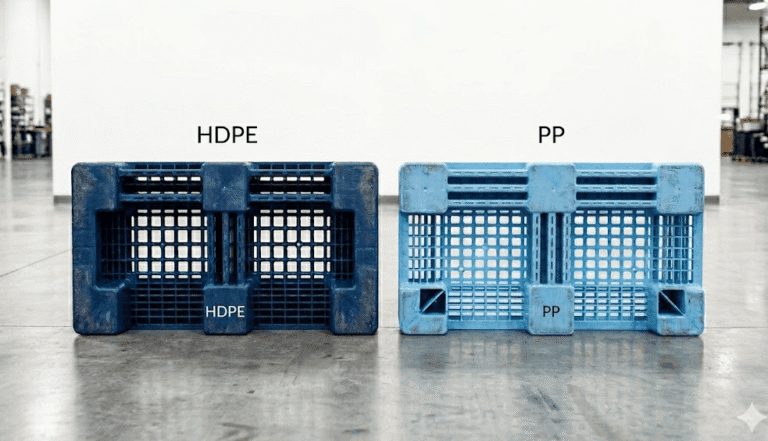
Raw material quality is another key factor. HDPE is the most common material for heavy duty models. It holds its shape steadily under heavy loads. It does not soak up moisture the way wooden pallets do.
Production standards impact pallet lifespan more than most warehouse managers realize. Qingdao CNplast Co., Ltd., for example, maintains strict injection molding consistency and adds rib-reinforced structures to its pallet products.
Performance Characteristics Of Wooden Pallets In Different Logistics Scenarios?
Wooden pallets remain a popular choice for regional distribution work. This is especially true for operations with loose return logistics rules. Repair work for wood pallets is simple and accessible. Local workshops can replace broken boards quickly, which lets these pallets keep working for short-term use cycles.
Wooden pallets deliver stable performance in dry, well-controlled warehouse storage conditions. Problems start to show when the working environment changes. Moisture absorption softens the overall wood structure. Frequent forklift entry loosens nail joints over time. Corner cracks are the most common issue, and these small cracks will spread if left unaddressed.
This does not mean wooden pallets are not fit for industrial use. They just have different performance limits. They are practical and cost-effective for short transport chains. Their drawbacks only become prominent in high-frequency, heavy-load circulation scenarios.
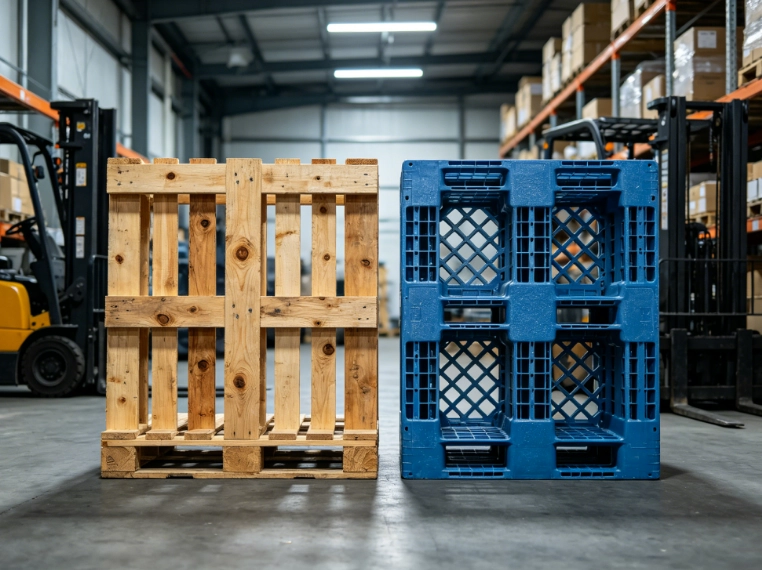
Heavy Duty Plastic Pallets Vs Wooden Pallets Lifespan And Operational Stability Comparison?
When used in high-frequency logistics environments, the biggest difference between plastic and wooden pallets is performance consistency.
Plastic pallets retain their original shape well after repeated handling. Long stacking periods only cause minimal deformation. Moisture and temperature changes do not create obvious damage to their structure. This makes them a more stable option for automated warehouses and export shipping.
Wooden pallet performance is inconsistent in daily use. Some wood pallets last a long time, while others fail quickly. It all depends on raw wood quality and on-site handling conditions. Logistics operators spend a lot of effort controlling this uncertainty, particularly in busy fast-moving distribution centers.
Facilities that need stable racking compatibility and smooth conveyor line operation often choose optimized pallet designs. CNplast’s customized pallet solutions include strict load testing and dimensional control during production.
Lifecycle Cost Efficiency In Plastic Pallet And Wooden Pallet Selection
Total pallet cost is never limited to the basic unit purchase price. Many hidden operational costs add up over time. Repair time, frequent replacement needs, and accidental product damage all increase overall warehouse expenses.
Wooden pallets have a lower upfront cost, which makes them appealing at first sight. The total cost will rise steadily once regular repairs become necessary. Loose nails, split boards, and unstable stacking can scratch goods or cause load shifts. Most of these minor incidents go unrecorded. They still disrupt daily warehouse workflow and reduce operational efficiency.
Heavy duty plastic pallets have a much longer service interval before replacement is needed. They reduce work interruptions during loading and unloading processes. For long-term logistics planning, fewer replacements also mean less operational waste and lower recurring costs.
Many companies use a mixed pallet strategy based on route characteristics. Plastic pallets are used for long-term circulation and export lines. Wooden pallets stay in use for local short-distance transport. There is no one-size-fits-all solution for pallet selection.
You can find more professional pallet selection guidelines in the CNplast.
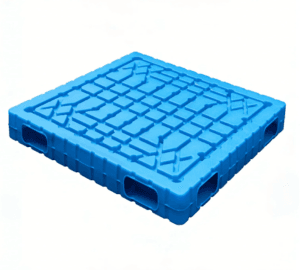
Industrial Engineering Design Behind Reliable Heavy Duty Plastic Pallet Systems
Material type is not the only factor that decides pallet performance. Fine design details affect real-world usability more than people think.
Deck rib structures, forklift entry angles, and edge reinforcement all improve load distribution across the pallet surface. Small adjustments to these design elements reduce stress points during repeated lifting. This effectively extends the overall service life of the pallet.
Qingdao CNplast Co., Ltd. develops multiple pallet types for different scenarios. Its product line includes rackable pallets, stackable models, food-grade hygienic pallets, and export-specific designs. Each pallet type is engineered for specific handling conditions, instead of being a universal all-purpose product.
Customization is a valuable part of pallet solution design. Manufacturers can adjust pallet size and internal structure to match unique warehouse layouts and transport system requirements.
Sustainability And Long Term Supply Chain Value Of Reusable Plastic Pallet Systems
Pallet selection also impacts the long-term sustainability of supply chain operations. Reusable plastic pallets cut down single-use waste. They remain in active circulation for far longer than traditional disposable pallet options.
HDPE plastic pallets are fully recyclable once they reach the end of their service life. This creates a closed material loop. Old pallet materials can be reprocessed for new production, instead of being discarded as waste. This reduces the overall frequency of pallet replacement across entire warehouse networks.
Conclusion
Heavy duty plastic pallets and wooden pallets serve different roles in real logistics operations. Plastic pallets generally offer longer service life, more stable performance under repeated handling, and lower replacement frequency, while wooden pallets remain a practical option for short-term and lower-intensity transport. The real choice depends on how often the pallets circulate, the load conditions, and the working environment in your warehouse or supply chain.
Qingdao CNplast Co., Ltd. provides industrial plastic pallet solutions designed for different applications such as export, warehouse storage, and racking systems. If you are interested in plastic pallets, feel free to contact the team and a response will be provided within 24 hours.
FAQ
Q1: How long do heavy duty plastic pallets usually last in warehouse use?
A: Service life varies based on load weight, handling frequency and warehouse storage conditions. Most heavy duty plastic pallets can work for several years in standard industrial environments.
Q2: Are wooden pallets still suitable for export shipping?
A: Yes, wooden pallets are still widely used for export transport. They are easy to source and repair on site.
Q3: What affects pallet lifespan the most in daily logistics work?
A: Four factors have the biggest impact. These are forklift collision impact, uneven load distribution, high humidity, and improper stacking methods.
Q4: Can plastic pallets be repaired if damaged?
A: Minor surface scratches or marks do not affect use and can be left untreated. Most heavy duty plastic pallets are built for long-term reuse, not frequent repair. Full replacement is the more common solution for damaged plastic pallets.