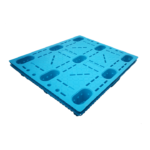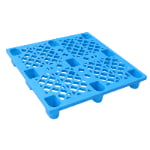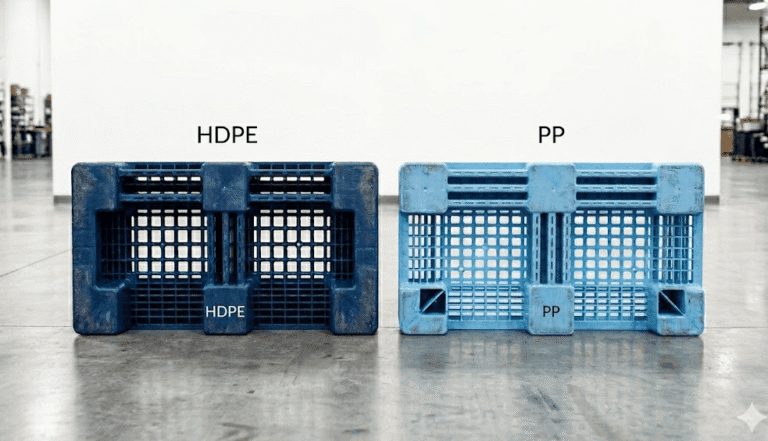
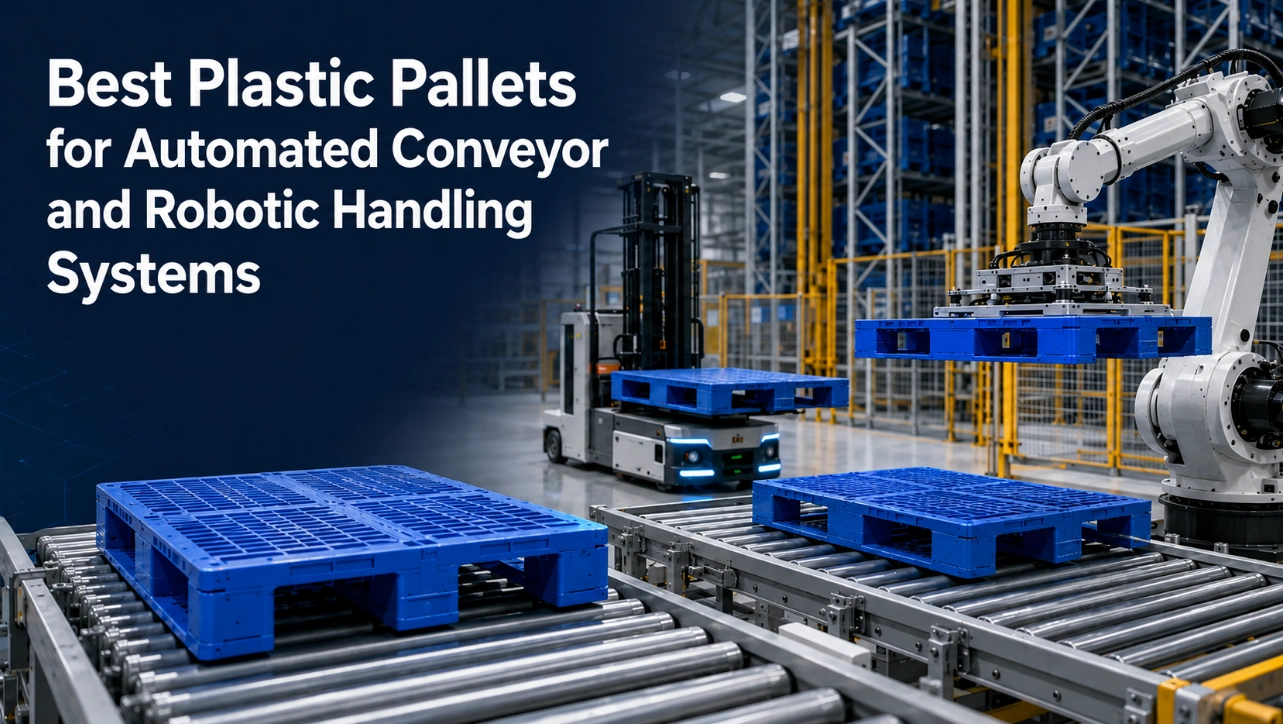
Warehouse automation is standard for modern logistics operations today. Conveyor setups and robotic handling tools have pushed material handling efficiency to higher levels. Even with good automation equipment, many facilities face operational issues. A lot of this comes down to low-quality, poorly designed pallets. These pallets cause conveyor jams, positioning misalignment, and gradual wear on expensive automated machinery. Facilities can cut unplanned downtime and keep workflows steady if they use pallets that fit AGV, robotic arm and high-speed conveyor standards. Qingdao CNplast Co., Ltd. makes plastic pallets built exclusively for automated warehouse work. The products deliver solid load strength, accurate dimensions and consistent surface quality. They work well for all kinds of complex automated warehouse operations.
Why Are Plastic Pallets Becoming The Preferred Choice For Automated Material Handling?
According to market analyses, the global plastic pallets market is projected to grow significantly due to automation demands, valued at approximately USD 9.4 billion in 2026 and expected to reach USD 14.95 billion by 2033, at a CAGR of around 6.9%.Automated equipment needs consistent, reliable pallet performance to run properly. Wooden pallets, the traditional option, have many common flaws. They warp over time, splinter during regular use, and never hold fully consistent dimensions. These small inconsistencies are enough to stop conveyors and cause robotic gripper failure on site. Plastic pallets fix most of these issues. They keep uniform geometry through thousands of operation cycles, so automated workflows see far fewer interruptions.
Consistent Dimensions For Automated Operations
According to industry analyses, plastic pallets provide the uniform geometry needed for automated systems, where even minor deviations (as little as 1 mm) can trigger sensor errors—issues far less common than with wooden pallets that warp and vary naturally.
Precision is key for robotic picking and sequential conveyor pallet movement. Sensors on automated systems are extremely sensitive. Even tiny differences in pallet width or thickness will throw off sensor alignment. All plastic pallets are manufactured with strict tolerance controls. This lets forklifts and AGVs access pallets without inconsistency. CNplast rackable pallets feature stable, repeatable sizing. They are fully compatible with standard automated storage and retrieval systems.
Reduced Downtime Caused By Pallet Defects
Wooden pallets split and chip easily under normal load conditions. Plastic pallets do not have these defects in daily use. Less pallet damage means fewer full line stops and less routine equipment maintenance. Most automated warehouses run 24/7, so pallet reliability is non-negotiable. CNplast plastic pallets go through dynamic load and deflection testing. This controlled testing ensures stable performance during continuous long-term operation.
Improved Compatibility With Robotics And Conveyors
According to life cycle assessments and industry comparisons, plastic pallets typically offer service lives of 50–100 cycles or more (often 8–15+ years in professional use), compared to wooden pallets that commonly last 5–30 cycles or around 3–7 years before significant degradation.
Robotic arms and conveyor belts rely on flat, even pallet surfaces to work correctly. Plastic pallets have uniform top decks and standardized bottom structures. Grippers and trolley systems make stable contact with these pallets every time. Operational errors during automated picking and placement drop significantly because of this. For tight-tolerance automation projects, CNplast pallet products integrate seamlessly with most mainstream robotic and conveyor systems.
What Features Should A Plastic Pallet Have For Conveyor And Robotic Systems?
Size is not the only factor when you select pallets for automation. Load capacity, structural build and surface type all impact real-world performance. A well-built automation pallet holds heavy goods without bending. It moves freely on conveyor lines and matches standard robotic gripper specs. Pallets with solid base structures will not tip when lifted by AGVs or stacked in automated storage racks. Material rigidity and durability keep performance consistent across repeated operational cycles.
High Dimensional Accuracy
Length, width and height precision matters greatly for automated sorting work. Just one millimeter of size variation can trigger sensor errors and system pauses. CNplast uses injection molding to maintain strict dimensional tolerances for all pallets. The three-runner structure supports four-way entry. It fits conveyors, forklifts and automated retrieval arms with no compatibility issues.
Reinforced Structural Strength
Life cycle assessments show plastic pallets typically endure 50–100 cycles (with some designs reaching 280+ cycles), compared to wooden pallets often limited to 5–30 cycles before significant degradation or repair.
Pallets must resist bending under dynamic load conditions. Steel-reinforced and rackable pallet designs support heavier stacked loads. They minimize deflection during conveyor transport. CNplast offers multiple reinforcement options. These designs hold up to constant robotic pick-up work and high-rack stacking in busy warehouses.
Stable Bottom Design
A flat, stable base lets pallets move smoothly along conveyor rollers. It also eliminates most tipping risks during operation. Pallets with evenly distributed support points reduce mechanical wear on conveyor rollers. They make accidental toppling far less likely in automated workflows.
Anti-Slip Surface Performance
Pallet surface texture affects both cargo stability and robotic gripper accuracy. Mild anti-slip surface finishes stop goods from sliding during high-speed conveyor movement. This cuts down on product misalignment and dropping incidents in automated lines.
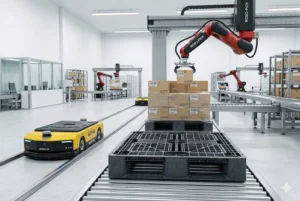
Why Do Some Pallets Fail In Automated Warehouses?
Pallet failure happens often in high-speed, heavy-load automated warehouse environments. Wooden pallets bend and warp with use, and exposed nails can scratch or damage automated equipment. Low-cost generic plastic pallets also fail over time. They crack and deform after repeated operation.
Excessive Deflection During Conveyor Transport
Thin or under-reinforced pallets bend when holding heavy loads. Conveyor sensors detect this abnormal deflection and slow or stop the entire production line. Workflow misalignment follows quickly after. CNplast prevents this issue. All pallets complete rated load deflection testing, and runner positions are optimized for full structural support.
Inconsistent Bottom Geometry
Uneven bottom runners and deck boards block smooth forklift entry and robotic suction functions. CNplast uses precision molding for its three-runner pallets. Contact points stay consistent for all mechanical handling methods.
Damage From Repeated Robotic Handling
Constant lifting, gripping and placement wears down low-quality pallets fast. Pallets with good crack resistance and stable structure need fewer replacements. They reduce overall operational downtime. CNplast builds pallets with high-grade polypropylene and reinforced structures. These units handle frequent robotic operation with minimal degradation.
Poor Performance In High-Rack Storage
High-rack storage creates continuous static load pressure on pallets. Pallets that compress or bend under vertical weight make stacked cargo unstable. CNplast rackable plastic pallets retain their shape under heavy loads. They support safe stacking and meet automated high-density storage requirements.
Best Plastic Pallets For High-Speed Conveyor And Robotic Operations
Pallets built for high-speed movement and robotic interaction greatly improve warehouse workflow efficiency. Standard plastic pallets cannot handle constant movement and repeated robotic handling long term. CNplast’s automation-specific pallets are fully tested for conveyor speed, AGV compatibility and robotic arm integration.
Superior Dimensional Accuracy For Automated Systems
Accurate pallet measurements lower error rates for automated scanning, picking and placement. CNC molding reduces batch-to-batch size deviation. Automated equipment maintains steady, reliable performance as a result.
Enhanced Load-Bearing Capacity
Reinforced pallet structures hold heavy stacked goods without sagging. Steel-reinforced and rackable models support dynamic loads between 1,000 and 2,000 kilograms. These pallets reduce equipment errors on conveyor and AGV lines.
Durable Surface For Robotic Gripper Compatibility
Specially finished plastic surfaces ensure secure gripping during robotic handling. The mild textured surface prevents slippage. It does not interfere with cargo placement or suction device function at all.
Proven Performance In AS/RS And AGV Applications
CNplast pallets are tested through thousands of repeated automated cycles. They resist cracking, bending and surface wear effectively. Consistent structural performance cuts maintenance work and pallet replacement frequency.
Which CNplast Plastic Pallets Are Suitable For Automated Conveyor And Robotic Handling Systems?
CNplast offers targeted pallet models for different automation environments. Rackable, steel-reinforced and three-runner pallets cover most standard load and workflow needs. Custom solutions are available for unique operational scenarios. Businesses can adjust runner placement, surface finish and overall dimensions to match their existing equipment.
Rackable Plastic Pallets For AS/RS Warehouses
These pallets support heavy stacking and fit all standard automated storage systems. Uniform surface design lets robotic grippers operate without positioning errors.
Steel-Reinforced Plastic Pallets For Heavy Loads
Pallets with steel reinforcement hold their shape under high dynamic loads and frequent AGV contact. The design minimizes bending deformation. It extends pallet service life and reduces wear on automated equipment.
Three-Runner Plastic Pallets For Conveyor Applications
Uniform bottom runners allow smooth pallet movement on conveyor rollers. The design supports four-way forklift entry. It integrates easily with most AGV systems on the market.
Custom Plastic Pallets For Specialized Automation Projects
Customization covers tailored dimensions, surface textures and structural reinforcement. It guarantees full compatibility with specialized robotic arms, conveyor lines and high-density storage racks. CNplast adjusts pallet designs to match exact on-site operational needs.
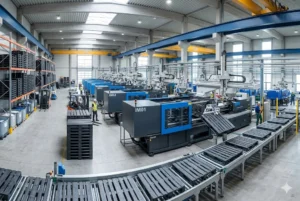
How Do Plastic Pallets Improve AGV And Robotic Handling Efficiency?
Automated forklifts and robots rely on predictable pallet performance to work correctly. AGV-specific plastic pallets cut operational errors and tipping risks. They keep conveyor lines running continuously with fewer stops. Overall warehouse operation consistency improves a lot with high-quality plastic pallets.
Flat, uniform pallet surfaces let sensors capture positioning data accurately. This is critical for precise robotic pick-and-place work. Standard runner geometry enables smooth robotic fork entry. Proper runner spacing avoids misalignment and unexpected line shutdowns.
Durable plastic pallets rarely crack or bend in regular use. Facilities spend less on pallet replacements and equipment repairs. Fewer operational interruptions also lower labor costs. Standardized pallets let automated systems run at set speeds without constant manual adjustments.
Which Industries Benefit Most From Automation-Ready Plastic Pallets?
Automation-compatible plastic pallets work well across many industries. They boost operational safety, reduce handling errors and increase throughput for warehouses moving heavy or sensitive goods.
Food And Beverage Manufacturing: Consistent pallets support smooth conveyor transport of packaged goods. Cleanable surfaces prevent contamination and meet standard hygiene compliance rules.
Pharmaceutical And Healthcare Logistics: Precise pallet sizing and stable structure reduce tipping risks. They protect fragile medical goods and maintain regulatory compliance.
E-Commerce Fulfillment Centers: High-throughput sorting operations benefit from stable, alignment-friendly pallets. They reduce conveyor jams and support AGV handling of mixed cargo loads.
Automotive And Industrial Production: Heavy industrial components need high-strength pallets. Reinforced plastic pallets cut downtime for robotic production lines.
Cold Chain Warehousing: Plastic materials retain structural integrity in low-temperature environments. They perform reliably during automated storage of chilled and frozen products.
How Can Businesses Select The Right Plastic Pallet For Future Automation Projects?
Businesses need to balance load requirements, equipment compatibility and operational goals to pick the right pallets. Good selection avoids costly mistakes and maximizes automation efficiency.
Teams should evaluate both dynamic and static load limits first. Pallets suited for floor storage do not always work for automated racking systems. If goods pass through conveyors, AS/RS and AGVs in one workflow, pallet performance must be checked for every stage. CNplast provides load test data and technical support for accurate pallet selection.All pallet design features need to match existing on-site equipment. Runner layout, pallet height, fork entry type and bottom structure all affect compatibility.
Conclusion
Consistency is the most important trait for pallets used in automated conveyor and robotic systems. Pallets with unstable sizing, poor load resistance or fast wear will disrupt entire warehouse workflows.
Buyers need to check dimensional accuracy, structural strength, bottom design and equipment compatibility together when selecting pallets. Rackable, steel-reinforced and three-runner pallets each serve distinct automation use cases.
Qingdao CNplast Co., Ltd. offers a full lineup of plastic pallet solutions for conveyors, AGVs and robotic warehouse operations. The company serves logistics, food, pharmaceutical and industrial sectors with custom, practical pallet solutions for warehouse automation upgrades.
FAQ
Q1: Are Plastic Pallets Better Than Wooden Pallets For Automated Conveyor Systems?
A: Plastic pallets are more suitable for most automated environments. They offer more consistent dimensions, smoother surfaces and longer service life. These features reduce conveyor interruptions and improve robotic handling accuracy.
Q2: What Type Of Plastic Pallet Works Best With AGVs?
A: Pallets with stable runner designs, fixed fork entry points and minimal dimensional variation work best. Three-runner and rackable plastic pallets are the most common options for AGV systems.
Q3: Can Plastic Pallets Be Used In AS/RS Warehouses?
A: Yes. Rackable plastic pallets maintain structural stability under rack loads. They deliver reliable positioning for automated equipment, ideal for AS/RS warehouse use.
Q4: How Long Do Plastic Pallets Typically Last In Automated Operations?
A: Service life depends on load weight and handling frequency. High-quality plastic pallets can operate steadily for several years in high-demand automated facilities.
Q5: Can Plastic Pallets Be Customized For Robotic Handling Systems?
A: Yes. Manufacturers can customize pallet dimensions, surface textures, anti-slip features, RFID integration, colors and reinforcement structures to match specific system requirements.