
Losing just 1% of your pallet inventory each year can bleed tens of thousands of dollars from your bottom line. While many people ask ‘Are plastic pallets trackable?’, the real question is how much visibility are you losing by sticking to manual systems? Yes — plastic pallets are trackable, and they are the definitive solution for modern, data-driven supply chains.Plastic pallets are highly trackable using Barcode, RFID, and GPS technologies. Unlike wood, RFID Plastic Pallets allow for automated, real-time inventory visibility, reducing loss by up to 99%. The most durable method is embedding passive RFID tags directly into the HDPE structure during manufacturing for lifetime traceability.
How Does Plastic Pallet Tracking Work?
The first layer is the tag. Unlike one-size-fits-all solutions, Qingdao CNplast Co., Ltd. offers tailored integration services, allowing you to choose between surface-mounted labels or fully embedded ISO/IEC 18000-6C tags during the injection molding phase. This custom approach ensures that the Plastic Pallet Tracking hardware is perfectly positioned to align with your specific warehouse reader heights, eliminating ‘blind spots’ in your data capture.
The second layer is the reader: scanners or antennas placed at key checkpoints — warehouse entrances, dock doors, distribution hubs. Every time a pallet passes through, the reader captures its data automatically.
The third layer is the software: a pallet registration barcode RFID warehouse management system that logs every scan, maps each pallet’s movement, and gives you full supply chain visibility from a single dashboard.
What Are the Main Ways to Track a Plastic Pallet?
Barcode and QR Code
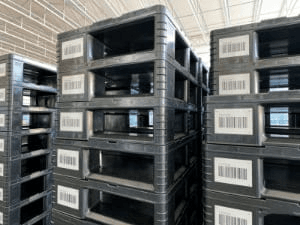
Barcodes are the simplest entry point into warehouse pallet tracking — affordable, familiar, and easy to roll out without major infrastructure.
A label is printed and applied to the pallet. Workers scan it manually at each handoff point as part of pallet registration barcode RFID warehouse management workflows. Your system logs the scan and updates the record.
For many operations — especially those with stable, predictable workflows — barcodes and QR codes remain a practical and cost-efficient choice. In lower-volume settings these are easy to manage, though operations scaling toward higher throughput often find this is the point where upgrading to RFID starts to make sense.
RFID Plastic Pallets: The Gold Standard for Automation
This is where RFID pallet tracking gets genuinely powerful — and it’s the method most operations are moving toward.
Pallet RFID tags communicate wirelessly with fixed readers using radio frequency identification. No line of sight needed. No manual scanning. As pallets move through a dock door or pass a reader in an aisle, their data is captured automatically — sometimes dozens at once. When you think about the RFID vs barcode pallet debate, this difference alone changes the economics of running a large facility.
There are two formats worth knowing:
- RFID pallet labels: Flexible adhesive tags applied to the pallet surface. Lower cost and easy to deploy, but more exposed to physical damage than embedded options. Best suited for shorter-cycle operations where tags are replaced regularly.
- Embedded pallet RFID tags: High-performance chips compliant with ISO/IEC 18000-6C (EPC Gen2)standards are molded directly into the HDPE during manufacturing. More durable, tamper-resistant, and suited for long-term reusable pallet programs.
For operations that need flexibility across locations, a mobile RFID pallet scanning setup — handheld readers carried by warehouse staff — offers a lower-infrastructure entry point into RFID without requiring fixed reader installation at every checkpoint.
There are also two power types:
- Passive RFID tags: No battery, draws power from the reader signal. Low cost, low maintenance, best for closed-loop networks.
- Active RFID tags: Battery-powered, broadcast continuously. Higher cost, needs recovery and recharging after each cycle.
RFID-enabled plastic pallets have a clear structural advantage: chips can be permanently recessed into the pallet body, shielded from impacts, moisture, and rough handling. That’s something wooden pallets simply can’t offer reliably.
GPS and Bluetooth Trackers
When tracking pallets in transit across long distances, you need something that travels with them.
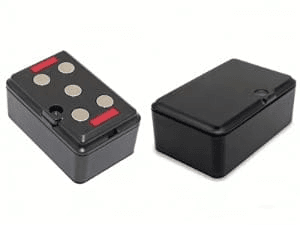
GPS trackers provide real-time location data wherever cellular coverage exists. Ideal for high-value shipments, open-loop supply chains, and temperature-sensitive cargo—scenarios where mid-transit visibility loss is unacceptable—they come with costs: device fees, ongoing data plans, and the need to recover and recharge trackers post-trip.Bluetooth trackers, a low-cost indoor alternative, map pallet locations within warehouses. Their limited range, however, renders them useless beyond facility boundaries.
Which Method Should You Use? A Quick Comparison
| Barcode | Passive RFID | Active RFID | GPS | |
| Cost | Low | Medium | High | High |
| Scan method | Manual | Automatic | Automatic | Automatic |
| Range | Short | Short–Medium | Medium | Global |
| Best for | Small ops, tight budgets | Closed-loop warehouses | Large facilities | In-transit tracking |
Why Are Plastic Pallets Easier to Track Than Wooden Ones?
When evaluating why plastic pallets are trackable at a higher reliability rate than wood, the physical integrity of the material is key.Wood warps, absorbs moisture, and degrades over time — making reliable tag attachment genuinely difficult. Adhesives fail, embedded chips shift, and surface damage can knock a barcode out of readability entirely. When it comes to plastic pallets vs wooden pallets tracking, the physical properties of plastic win on almost every count.
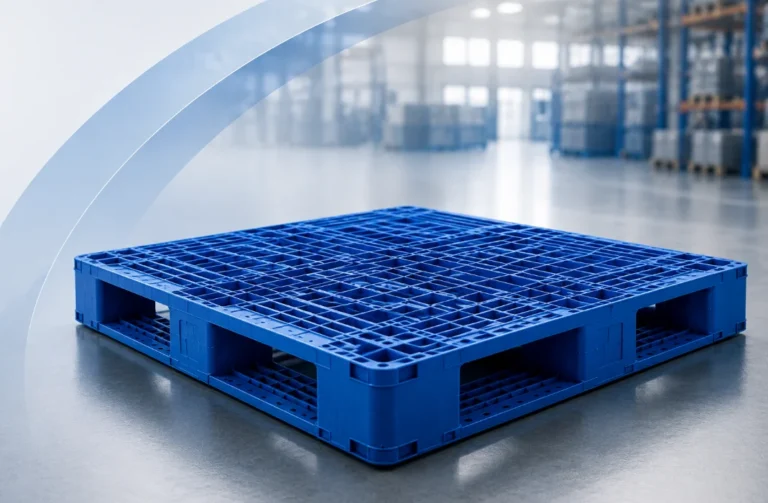
HDPE plastic pallets eliminate most of these problems. Pallet RFID tags can be molded directly into the pallet structure during manufacturing, sitting in a recessed pocket that protects them from forklifts, pressure washing, and daily impact. The tag stays exactly where it should be, scan after scan, year after year.Qingdao CNplast Co., Ltd. addresses these environmental challenges by using 100% virgin HDPE in their heavy-duty models, ensuring the material doesn’t warp or degrade under extreme temperatures. Their specialized manufacturing process allows for precision-molded recessed pockets, meaning your RFID Plastic Pallets aren’t just trackable—they are shielded against the high-impact environments common in forklift handling and automated retrieval systems.
P.S. RFID slot position varies by pallet model — the image above illustrates one common configuration for reference only.
What Are the Key Benefits of Tracking Plastic Pallets?
RFID pallet tracking isn’t just about knowing where things are — it changes how efficiently your whole operation runs.Industry benchmarks from organizations like the Fraunhofer Institute suggest that RFID adoption can improve inventory accuracy to over 99%, a claim supported by the physical durability of HDPE pallets.
Real-time inventory visibility. You always know how many pallets are in circulation, stuck at a partner’s site, or overdue for return. Cycle counts become continuous rather than a quarterly headache.
Pallet loss prevention and theft deterrence. When every RFID pallet has a digital identity, theft and misrouting become much harder to hide. Alerts flag missing pallets immediately. Operations that have implemented full supply chain tracking have reported loss reductions of up to 99% — with the investment paying back in under a year.
Faster warehouse operations.
A well-integrated pallet registration barcode RFID warehouse management workflow removes manual scanning entirely. Forklift drivers keep moving, receiving and dispatch speeds up, and in high-throughput environments, that time saving compounds quickly.
Compliance documentation, automatically.
In food and beverage and pharmaceutical operations, a documented chain of custody isn’t optional — it’s a regulatory requirement. Tracked pallets generate that record without any extra paperwork.
Which Industries Benefit Most from Trackable Plastic Pallets?
Some industries don’t just benefit from IoT pallet tracking — they depend on it.
Food, beverage, and pharmaceutical operations require more than just a tag; they need hygienic reliability. As a leading global supplier, Qingdao CNplast Co., Ltd. manufactures FDA-compliant, easy-to-sanitize pallets that are pre-configured for IoT sensors. Their large-scale wholesale capabilities ensure that even for massive 3PL or automotive rollouts, every RFID Plastic Pallet meets the same rigorous standards for weight consistency and signal transparency required by modern WMS platforms.
Pharmaceutical supply chains carry some of the strictest chain-of-custody rules in any industry. Modern RFID-enabled pallets equipped with environmental sensors log temperature, humidity, and shock events at every point in the journey, providing the documentation auditors require.
Automotive manufacturing runs on just-in-time logistics. A missing pallet can stall an entire production line. RFID tracking keeps reusable containers and pallets moving on schedule across multiple plants and supplier networks.
E-commerce and 3PL providers handle enormous pallet volumes at high speed. Automated warehouse pallet tracking integrates directly with WMS platforms, keeping inventory accurate without adding labor at every touchpoint.
How Do You Choose the Right Tracking Setup for Your Operation?
Start with one key question: do your pallets stay within your own network, or do they travel to external partners?
If they stay in-house, passive RFID is almost always the most cost-effective foundation. A well-configured RFID pallet tracking system with fixed readers at key checkpoints pays for itself quickly, and the ongoing cost per pallet is minimal. If budget or facility layout makes fixed readers impractical right now, starting with mobile RFID pallet scanners gives you the same data capture flexibility without the infrastructure commitment.
If your pallets move through an open-loop supply chain, you need either a GPS-based solution or participation in a pooling program with shared infrastructure. In these cases, RFID pallet labels — rather than permanently embedded tags — may also be a more practical choice, since labels can be applied and replaced at each pooling cycle.
Next, consider your volume. High-throughput operations get the fastest ROI from full automation. Smaller operations may find that a pallet registration barcode RFID warehouse management hybrid — barcodes for most pallets, RFID for high-value or compliance-critical loads — is a sensible and scalable starting point.
Finally, factor in your industry. Food and pharmaceutical operations may face compliance requirements that effectively make the decision for you.
The smartest move is to choose a system that scales. Starting with passive RFID or mobile scanning today doesn’t lock you in — it gives you the foundation to add active tags, GPS layers, or IoT sensors as your needs evolve.
Still losing pallets, chasing manual records, or unsure which tracking setup fits your operation? CN Plast can help you cut through the confusion.
As experienced plastic pallet suppliers, we manufacture RFID-ready pallets built for real operational demands — with recessed tag pockets, consistent dimensions, and durable HDPE construction that protects your tracking investment long-term. From custom RFID tags for pallets embedded at production stage to high-volume orders through our plastic pallet supplier wholesale program, we’ve supported food, pharma, automotive, and e-commerce operations where getting it wrong isn’t an option.Get in touch with CN Plast today — tell us your setup, and we’ll tell you exactly what you need.
FAQ
Q1:Which tracking technology is most cost-effective for high-volume fleets?
A:Passive RFID Plastic Pallets generally offer the best ROI. While the initial infrastructure (readers/software) requires investment, the cost per pallet is low, and the tags require no battery maintenance, making them ideal for long-term, closed-loop supply chains.
Q2:How do you prevent RFID tags from being damaged during handling?
A:The most effective method is molding recessed pockets directly into the pallet body during production. This ensures the tag sits below the surface level, shielding it from forklift tines and impact while maintaining a consistent scan rate. Qingdao CNplast Co., Ltd. specializes in this reinforced integration.
Q3: Will metal racks or liquid cargo interfere with my tracking accuracy?
A:Yes, metal and liquids can reflect or absorb RFID signals. To mitigate this, we recommend using spacer-optimized tag placement and UHF (Ultra High Frequency) technology. For extreme environments, a hybrid system using barcodes as a fail-safe remains a practical industry standard.