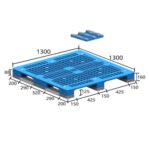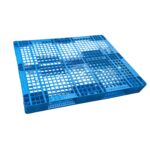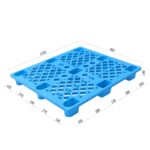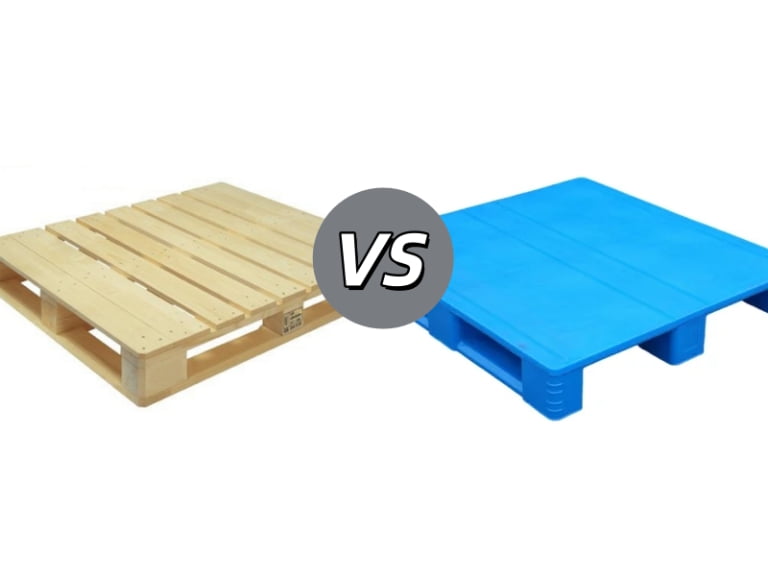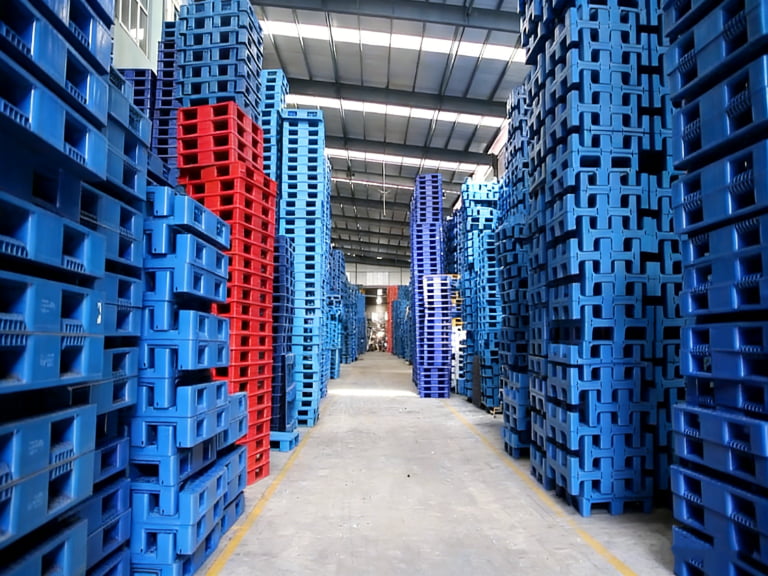
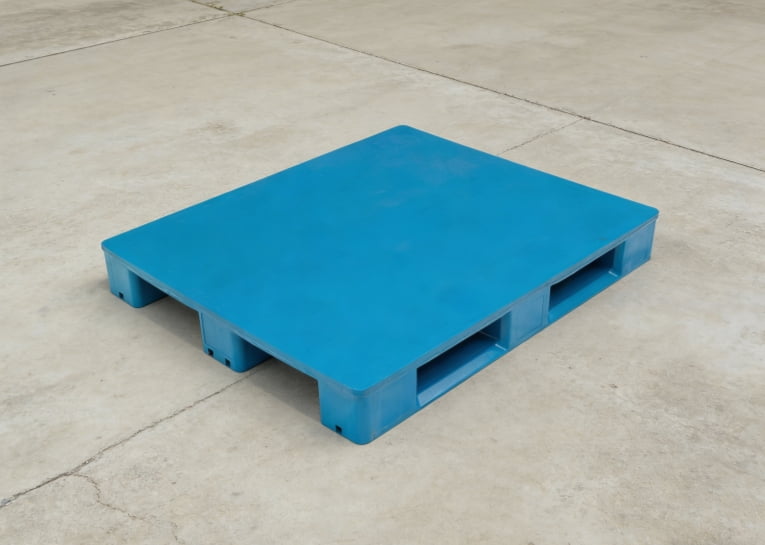
Plastic pallets can be purchased through six main channels: local distributors, China suppliers, international e-commerce platforms (Amazon, Alibaba.com, Made-in-China.com), trade shows, and direct manufacturer sourcing. Each route solves a different problem—speed for urgent replacement, customization for complex handling, or cost control for bulk replenishment. In this guide, you’ll learn where each channel fits, what risks buyers often miss (load ratings, material grade, racking use, documentation), and how to choose a supplier that won’t create hidden downtime in your warehouse. Keep reading to make your next purchase a controlled decision, not a costly trial.
Main Uses of Plastic Pallets in Real Operations
Plastic pallets aren’t just a warehouse add-on; they support your daily lifts, staging, and shipments, keeping inventory flow and compliance consistent at scale.
- Warehousing & distribution handling: Used for inbound staging, pick/pack flow, cross-docking, and outbound shipping where consistent dimensions reduce jams and product damage during frequent moves.
- Manufacturing & assembly lines: Supports WIP transport, line-side supply, and repeatable internal circulation where durability and consistent footprint improve throughput and reduce downtime.
- Hygiene-critical industries (food, pharma, cosmetics): Chosen for non-porous surfaces and easier cleaning/disinfection to reduce contamination risk and support audits and hygiene programs.
- Export shipping and customs reliability: Commonly adopted to avoid wood-treatment complexity because plastic pallets are typically ISPM 15–exempt, lowering the risk of documentation delays.
- Chemical and drum storage (spill control scenarios): Spill containment pallets are used under drums/IBCs to capture leaks and help meet facility safety and environmental requirements.
Buying from Local Distributors in Your Country
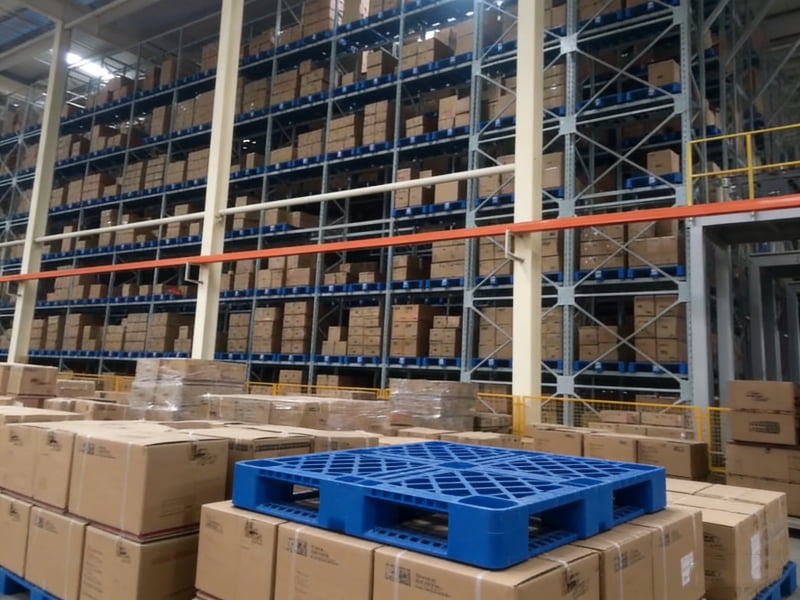
Local distributors can be the fastest way to get plastic pallets when you need stock immediately. You typically buy from their local inventory, not from a production line. That can solve short-term gaps in your warehouse flow, especially when a shipment is delayed or a new project starts suddenly.
Advantages of a local supplier
- Short lead time: You can often receive pallets in days, not weeks.
- Local communication: Same business hours and easier calls.
- Simple paperwork: Local invoicing and domestic delivery terms.
- Quick replacement: If a pallet arrives damaged, you may swap it faster.
Limitations you should plan for
- Higher unit cost: You are paying a distribution margin and local storage cost.
- Limited models and sizes: Many distributors carry only a few “standard” SKUs, which may not match your racks, forklifts, or containers.
- Weak customization: Logo, color, RFID pockets, anti-slip, or steel reinforcement options are often not available, or come with long waits.
- Unstable supply: Inventory can sell out quickly. Restocking depends on their upstream factory schedule, not your timeline.
- Less technical support: Load rating, racking deflection, and testing reports may be unclear or incomplete, which increases risk in high-bay storage.
- Less traceability: Material grade (HDPE vs PP), recycled content, and batch control may not be transparent—this matters for hygiene and compliance.
- Warranty and accountability can be limited: If the pallet fails in your operation, you may face a long back-and-forth between distributor and manufacturer.
Buying from a China Supplier
If your operation needs stable supply, consistent specs, and a better total cost per trip, sourcing plastic pallets from China is often the most direct path.
Key advantages you can leverage
- Stronger cost-to-performance for bulk demand: When you are buying in container loads, China suppliers typically deliver a lower landed cost while keeping the structural design you need for daily forklift cycles, stacking, or racking use. This matters when your site runs high turns and pallet replacement becomes a visible operating cost.
- Wider selection for real scenarios: You can match the pallet to how you actually work—rackable pallets with steel reinforcement for high-bay racks, closed-deck pallets for hygiene control, or heavy-duty pallets for drums and dense loads. Instead of “whatever is in local stock,” your pallet choice follows your racks, forklifts, and shipping lanes.
- Clearer engineering and documentation: For procurement and QA, you can request load ratings, material statements (HDPE/PP), and inspection records, which reduces risk when your pallets enter regulated or audited environments.
- Customization that supports your business: If you need branded pallets, consistent colors for zone management, RFID positions, or special deck patterns for anti-slip handling, a manufacturing supplier can build this into production rather than treating it as an exception. For example, CN Plast typically supports OEM options such as logo marking, color selection, and specification alignment for export-focused projects.
One limitation to be clear about: China sourcing is generally not designed for retail or “small-quantity urgent buys.” It works best when you purchase wholesale or bulk and plan your replenishment cycle.
How to find a qualified China supplier
- Google search: Use commercial queries that match your use case, such as “rackable plastic pallet manufacturer China”, “heavy duty plastic pallets wholesale”, or “plastic pallet factory ISO 9001”. Then check whether the supplier shows clear specifications, load ratings, factory evidence, and export capability.
- Facebook: Many factories post shipment photos, new molds, and customer cases. You can quickly evaluate whether they work with distributors and whether they understand export packaging and lead times.
- YouTube: Look for production videos, load testing, forklift handling demonstrations, and warehouse use cases. This helps you confirm the pallet type and build quality before you request samples.
- LinkedIn: You can reach sales and operations teams directly, review company history, and evaluate how they serve global buyers. If your project involves standardization across sites, LinkedIn is also useful for long-term supplier communication.
If you share your target size, load type (static/dynamic/racking), and handling method, you can shortlist suppliers faster and avoid buying a pallet that looks right but fails in your real workflow.
International E-commerce Platforms
Amazon (retail-first)
If your team needs pallets quickly in small quantities, this channel fits “urgent replacement” scenarios. You can buy by the piece or small lots, ship fast, and close procurement with standard checkout. The trade-off is limited control: pallet load ratings, material grade (HDPE/PP), and racking performance details are often not documented in a way your QA team can rely on for high-bay or regulated use.
Alibaba.com (wholesale-focused)
This is designed for bulk buying and supplier comparison. You can request quotations, samples, and specification sheets, then negotiate packaging, lead time, and OEM options. It works best when your purchase volume is planned—container loads or project-based replenishment.
Made-in-China.com (wholesale-focused)
Similar to Alibaba.com, but often more manufacturing-oriented listings. If your operation needs consistent dimensions for forklifts, racks, or container loading, you can filter by pallet type, request technical data, and evaluate factory capability before you commit to volume orders.
Trade Shows
If your company buys pallets at scale and needs a long-term supply partner, trade shows can be a high-efficiency sourcing route. You can meet manufacturers from different regions in one trip, compare pallet designs for your real workflow (forklift handling, racking use, hygiene needs), and discuss specs face-to-face instead of exchanging long email threads. Typical events worth tracking include ProMat and MODEX (USA), LogiMAT (Germany), and CeMAT (Asia). Bring your target size, load requirement, and usage photos—your evaluation will be faster and more accurate.
What to Check Before You Buy Plastic Pallets
- Proven load performance (and the right load type)
Ask for static, dynamic, and racking load ratings—and confirm which one matches your use. If your pallets sit on beam racks, racking capacity and deflection control matter more than floor stacking numbers. - Material grade and consistency
Confirm whether the pallets are HDPE or PP, and whether the material is virgin, recycled, or mixed. This affects impact resistance, temperature behavior, odor, and long-term durability—especially if your pallets run in food, pharma, or clean handling areas. - Dimensional accuracy for your equipment
Verify the footprint, entry type (2-way/4-way), and bottom structure (runners/legs). Your forklifts, pallet jacks, conveyors, and containers all punish “almost standard” pallets with jams, tilt, and product damage. - Manufacturing capability and quality control
Check if the supplier can show factory evidence, QC checkpoints, and batch traceability. In high-turn operations, small defects become repeated downtime. You want stable molding, consistent wall thickness, and controlled shrinkage. - Compliance and documentation you can use
If your industry is audited, request certificates and test reports relevant to your market. You should also confirm whether the supplier can provide labeling, material declarations, and export packaging standards. - Lead time, packaging, and after-sales handling
Clarify production lead time, spare quantity policy, and how claims are handled. When your warehouse is under pressure, fast resolution matters as much as price.
Ready to Buy the Right Plastic Pallets? Partner with a Manufacturer Built for Wholesale
By now, you can see the real difference: retail and local stock solve short-term gaps, but long-term performance comes from choosing the right spec and a supplier who can hold it. As a plastic pallets manufacturer, CN Plast helps you standardize pallet size, load ratings (static/dynamic/racking), and handling compatibility—so your forklifts, racks, and containers run smoothly, not “almost right.” The result is fewer failures, cleaner audits, and a lower cost per trip you can defend internally.
Next step: Send your target size, load type, and usage scene. Get a fast, technical recommendation, a clear quotation, and a practical sourcing plan for bulk orders. Make your next pallet purchase a controlled decision—not a risk.